2026-2027 Respiratory Virus Season Vaccine Recommendations

Download PDF Download image

Vaccine Recommendations (Text-Only)

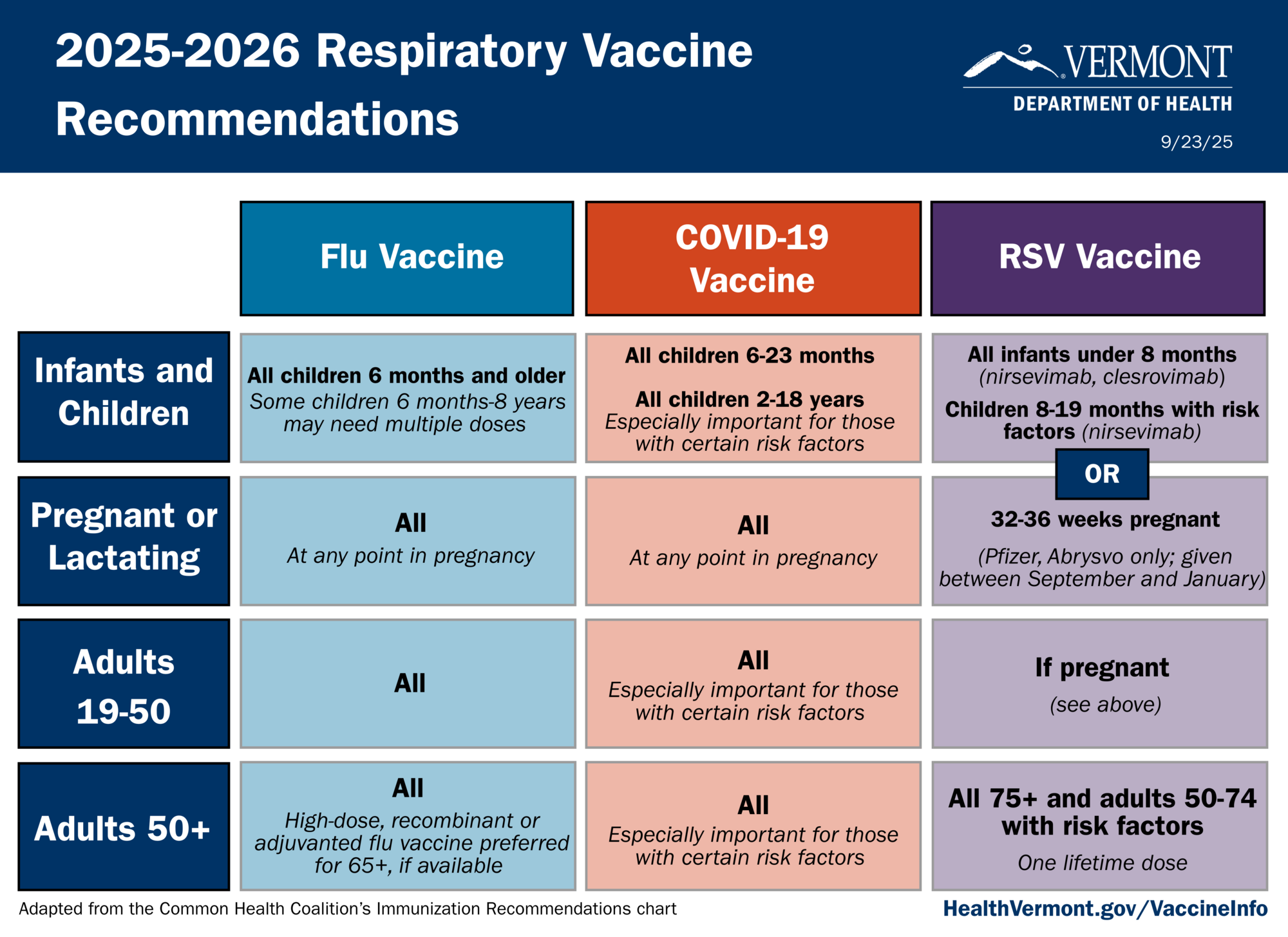
2026-2027 Respiratory Vaccine Recommendations (9/28/26)

Infants and Children

Flu Vaccine
  • All children 6 months and older
    • Some children 6 months-8 years may need multiple doses
COVID-19 Vaccine
  • All children 6-23 months
  • Children 2-18 years with certain risk factors, or if desired
RSV Vaccine
  • All infants under 8 months (nirsevimab, clesrovimab) 
  • Children 8-19 months with risk factors (nirsevimab)

OR 32-36 weeks pregnant

Pregnant or Lactating

Flu Vaccine
  • All
    • At any point in pregnancy
COVID-19 Vaccine
  • All
    • At any point in pregnancy
RSV Vaccine
  • 32-36 weeks pregnant Abrysvo (Pfizer) only; given between September and March 1

OR infant vaccine

Adults 19-50

Flu Vaccine
  • All
COVID-19 Vaccine
  • All
    • Especially important for those with certain risk factors
RSV Vaccine
  • If pregnant (see above)

Adults 50+

Flu Vaccine
  • All
    • High-dose, recombinant, mRNA, or adjuvanted flu vaccine preferred for 65+, if available
COVID-19 Vaccine
  • All
    • Especially important for those with certain risk factors
RSV Vaccine
  • All 75+ and adults 50-74 with risk factors
    • One lifetime dose

Review IDSA recommendations for people who are immunocompromised at IDSociety.org

Refer to the American Medical Association for more information at SpreadtheFacts.org

Health Vermont.gov/SeasonalVaccines


Flu Vaccine Information

2026-2027 Flu Season Updates

Flu Vaccine Availability and Ordering

The flu vaccine was made available to order by all VCVP and participating VAVP enrolled providers starting in September. Offsite flu clinics are encouraged to increase access in your community. 

Coadministration of Flu and Other Recommended Vaccines

The coadministration of vaccines involves the practice of administering multiple vaccines during a single medical visit, often requiring multiple shots. It is crucial to follow best practices, including using separate syringes, avoiding the mixing of vaccines, ensuring different injection sites, and administering more painful vaccines last. 

COVID-19 vaccines can be given alongside other vaccines like the flu vaccine if the recipient is eligible, but considerations include the patient's vaccination status, the risk of vaccine-preventable diseases, and the reactogenicity profile of the vaccines. Administering COVID-19 vaccines and other reactogenic vaccines in different limbs is advisable due to potential enhanced local reactions. 

Learn more about proper preparation and administration (Immunize.org)


RSV Immunization Information


COVID-19 Vaccine Information

COVID-19 Vaccine Ordering and Management

Vermont typically has these COVID-19 vaccines available to order: Moderna, Pfizer-BioNTech, and Novavax.

COVID-19 vaccines can be more complicated to manage. If you are an enrolled provider office, please always read e-mails from the Immunization Program (AHS.VDHImmunizationProgram@vermont.gov) and ensure all staff administering COVID-19 vaccines at your office undergo appropriate training to understand the nuances of each vaccine.

For past Immunization Program communications sent out by email, see Notices and Memos for Health Care Providers.

Talking with patients about the COVID-19 vaccine

Topics:
Last Updated: