Addressing overdose takes a comprehensive and holistic approach
Vermont's strategies focus on four key areas:
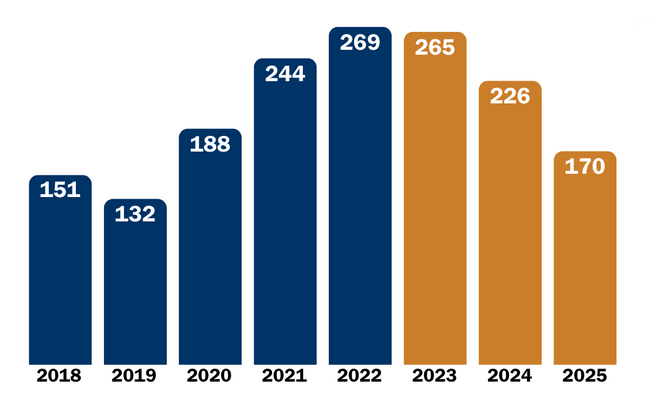
After a decade of steady increases in the number of overdose deaths due to overdose, deaths have started to decrease in Vermont.
Vermont's strategies focus on four key areas:
After a decade of steady increases in the number of overdose deaths due to overdose, deaths have started to decrease in Vermont.
Vermont's Social Autopsy Report identifies trends in how Vermonters who died of a drug overdose interacted with state systems prior to death to identify opportunities for intervention.
New for 2026: This year's report is presented as a series of data briefs instead of one, longer report. They will be released one-at-a-time, as ready.
Read previous years' reports at HealthVermont.gov/DSUreports
Check back soon for the 2026 Vermont Social Autopsy Report Brief: Recommendations
The Vermont Prescription Monitoring System (VPMS) helps health care providers improve patient care and prevent potential harm resulting from use of prescribed controlled substances, including opioids, by monitoring prescribing trends, allowing prescribers to review prescribing patterns and providing continued education to health care providers.
The “Rule Governing the Prescribing of Opioids for Pain,” enacted in 2017 and updated in 2024, provides legal requirements for the appropriate use of opioids in treating pain in order to minimize opportunities for misuse and diversion and optimize prevention of addiction and overdose.
The Opioid Settlement Advisory Committee, established by Vermont Legislative Act 118, convenes in meetings open to the public to develop recommendations on how to spend the state's share of settlement money with drug manufacturers and distribution companies over the toll caused by prescription opioids.
Vermont’s recovery system provides services that support a variety of avenues for recovery to address each person’s unique recovery journey, including peer recovery, family support, substance-free activities and access to recovery through Vermont’s emergency departments.
VT Helplink is a free resource that provides confidential, non-judgmental support and referrals to Vermont’s treatment and recovery services based on Vermonters’ needs and unique experiences.
KnowOD messaging provides strategies that people can take to reduce overdose and overdose death such as using new syringes, testing for fentanyl and using naloxone as well as how to get these resources for free through community efforts. It also helps people identify when someone might be experiencing an overdose and how to respond to reverse it.
Messaging focuses on people who have been prescribed opioids and discusses their strength, how easy it is to become dependent and addicted to them and how Vermonters can prevent addiction and overdose.
Vermont’s syringe service programs (SSP) provide free and anonymous servicesto reduce overdose and fatal overdose, in addition to preventing infectious diseases and connecting people to treatment and recovery services.
Access to the overdose reversal medication, naloxone (Narcan® nasal spray), has been greatly expanded in Vermont, with free distribution through:
Vermont’s prescription drug disposal system provides Vermonters with easy, free and convenient ways to safely get rid of unused or expired opioid medications through:
Vermont Department of Health
280 State Drive
Waterbury, VT 05671-8340