Food Safety
Almost everyone has experienced foodborne illness, usually called "food poisoning." Often these illnesses are merely uncomfortable and inconvenient and don't require medical care. However, such infections can also result in very serious consequences, including hospitalization and death.
Changes in the way food is processed and distributed, international markets, and consumer demand have altered our food supply. Today, food may reach the table through long chains of production, packaging, and transportation, providing many opportunities for contamination. All these factors increase the risk for foodborne illness.
Although large disease outbreaks associated with restaurants generally get more media attention, it is just as easy for foodborne illness to occur at home. If food is handled and prepared safely, most of these illnesses can be avoided.
Wash hands and surfaces often

Bacteria is present throughout the kitchen. It can be found on cutting boards, utensils, sponges, counter tops and other surfaces.
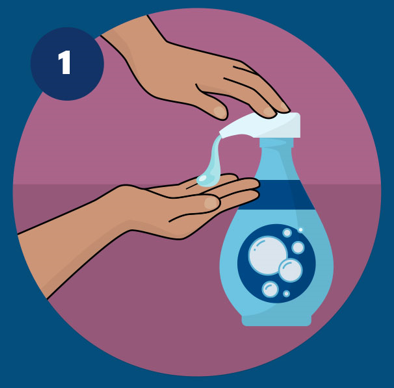
- Wash your hands with hot soapy water before handling food, between working with raw and cooked foods, and after using the bathroom, changing diapers and touching pets.
- Wash your cutting boards, dishes, utensils and counter tops with hot soapy water after preparing each food item and before you go to the next food. Sanitize all items regularly.
- Use plastic or other non-porous cutting boards. These boards should be run through the dishwasher - or washed in hot soapy water - after each use.
- Wooden cutting boards should be hard wood. Wash them thoroughly in hot soapy water after each use.
- Consider using paper towels to clean up kitchen surfaces. If you use cloth towels, wash them often in the hot cycle of your washing machine.
Separate: Don’t cross-contaminate foods

Cross-contamination is a term used to describe how bacteria can spread from one food to another. For example, cross contamination can occur when vegetables to be eaten raw come in contact with the liquid from raw meat, poultry and seafood.
- Separate raw meat, poultry and seafood from other foods in your grocery-shopping cart and in your refrigerator.
- If possible, use a different cutting board for raw meat products.
- Always wash hands, cutting boards, dishes and utensils with hot soapy water after they come in contact with raw meat, poultry and seafood.
- Never place cooked food on a plate, which previously held raw meat, poultry and seafood.
- Never store cooked foods or foods that will receive no cooking under raw foods in the refrigerator where juices could drip down and cause contamination.
- Always wash raw foods (fruits, vegetables, etc.) thoroughly.
Cook: Heat foods to proper temperatures
Is It Done Yet? Temperature Chart ![]()
USDA's recommended internal temperatures for meat and poultry products in handy chart form; Chart also available as a 17 x 11-inch poster ![]()
Food safety experts agree that foods are properly cooked when they are heated for a long enough time at a high enough temperature to kill any harmful bacteria:
- Turkey, Chicken, Duck
Whole, Pieces & Ground: 165º F - Beef, Veal, Lamb, Steaks & Roasts: 145º F
- Ground Beef, Veal, Lamb: 160º F
Color is NOT a reliable indicator that ground beef or ground beef patties have been cooked to a temperature high enough to kill harmful bacteria such as E. coli O157:H7 - Fish & Seafood: 145º F
Fish should be cooked until it is opaque and flakes easily with a fork. - Pork: 160º F
- Egg Dishes: 160º F
Cook eggs until the yolk and white are firm. Don't use recipes in which eggs remain raw or only partially cooked
- Use a clean food thermometer, which measures the internal temperature of cooked foods, to make sure meat, poultry, casseroles and other foods are cooked all the way through.
- When cooking in a microwave oven, make sure there are no cold spots in food where bacteria can survive.
- Bring sauces, soups and gravy to a boil when reheating. Heat other leftovers thoroughly to at least 165ºF.
- Hot foods should be held at 140ºF or higher or consumed within two hours of cooking time.
Chill: Refrigerate foods promptly

Cold temperatures keep harmful bacteria from growing and multiplying. Refrigerators should be set no higher than 40ºF and freezers set at 0ºF.
- Refrigerate or freeze perishables, prepared foods and leftovers within two hours or sooner.
- Never defrost food at room temperature. Thaw food in the refrigerator, under cold running water or in the microwave.
- Marinate foods in the refrigerator.
- For quick cooling, divide large amounts of leftovers into small, shallow containers before refrigerating.
- Don’t pack the refrigerator too full. Cool air must circulate to keep food safe.
When in doubt, throw it out!
If you're just not sure, then play it safe
Discard any questionable food items.
It's not worth the risk for you and your family
Fact Sheets & information
- Cooking for Groups: A Volunteer's Guide to Food Safety (USDA)
- Safe Food Handling (USDA)
- Foodsafety.gov
- Quick Consumer Guide to Safe Food Handling to Avoid Food Poisoning

- Holiday Food Safety
- Raw Milk (unpasteurized)
Contact us
Division of Health Protection
Vermont Department of Health
PO Box 70
Burlington, VT 05402
Tel. 800-439-8550 or 802-863-7221
E-mail: vdhco@state.vt.us